Q90 Q90T Qled Review: Real User Experience After 3 Months
The Quest for the Perfect Picture
I remember the day I finally pulled the trigger on the Samsung Q90T. I had spent weeks scouring forums, watching endless calibration videos, and staring at demo units in big-box stores until the sales associates started giving me suspicious looks. Moving from a mid-range LED to a flagship-level 4K QLED felt like a significant milestone in my home theater journey. Now that I’ve lived with this TV for exactly 92 days, the initial "new gadget" glow has faded, and I’ve settled into the reality of what this television actually offers. It has been my primary screen for everything from late-night Netflix binges and high-stakes console gaming to casual daytime news watching.
In this review, I want to move past the marketing jargon and the lab-tested specifications. While I appreciate knowing a TV has 1,500 nits of peak brightness or a specific number of local dimming zones, what really matters is how it looks when I’m sitting on my sofa at 8:00 PM with the lights dimmed, or how it handles the glare from my south-facing window during a Sunday afternoon football game. After three months, I've seen the Q90T at its best and its most frustrating, and I’m ready to share the honest truth about this QLED powerhouse.
Design and Initial Impressions
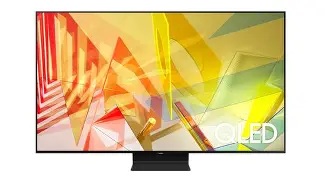
When I first unboxed the Q90T, I was immediately struck by the build quality. It feels substantial. Unlike some of the entry-level models that use lightweight plastics, the Q90T has a premium, industrial feel. The "Boundless Design" as Samsung calls it, is essentially a very thin bezel that makes the screen look like it’s floating. It’s elegant and doesn't distract from the content. What I personally appreciated was the heavy, centered pedestal stand. My media console isn't particularly wide, and many modern TVs use "chicken feet" stands at the far corners of the screen, which would have forced me to buy new furniture. This heavy center stand is not only practical but provides a very stable base that minimizes wobble.
The thickness of the panel itself is consistent. It’s not "razor thin" like an OLED, because it needs room for the Direct Full Array backlight system. I actually prefer this uniform depth; it looks better when wall-mounted compared to TVs that are thin at the top and bulge out at the bottom. However, one thing I found slightly disappointing was the omission of the One Connect Box. In previous flagship years, Samsung included an external box for all your HDMI ports, meaning only one clear cable ran to the TV. With the Q90T, everything plugs directly into the back of the panel. I spent a good hour trying to manage my four HDMI cables and an optical cord through the built-in cable tracks in the stand. It’s doable, but I missed the elegance of the One Connect system.
Day-to-Day Picture Quality
The first thing I noticed when I turned on the Q90T was the sheer vibrance. If you are coming from a traditional LED TV, the color volume here is staggering. Samsung’s Quantum Dot technology isn't just a gimmick; it produces reds and greens that feel alive. For the first month, I found myself re-watching nature documentaries just to see the saturation of tropical birds and rainforests. What I truly found impressive, however, was the Ultra Viewing Angle layer. In my living room, my partner often sits in an armchair at a 45-degree angle to the TV. On our old television, the colors would wash out and look grey from that spot. With the Q90T, I noticed that the color integrity and contrast stay remarkably consistent even when you aren't sitting dead-center.
Brightness is where this TV truly dominates. I have a very bright living room with large windows. During the day, my previous TV was essentially a mirror—I could see my own reflection more clearly than the movie I was watching. The Q90T handles glare better than any display I’ve ever owned. The anti-reflective coating is top-tier; it diffuses incoming light into a faint blur rather than a sharp reflection. Combined with the high peak brightness, I can watch dark scenes in a movie at 2:00 PM without having to close the blackout curtains. It’s a game-changer for daytime utility.
Contrast and the Local Dimming Experience
Since I don't have an OLED, I was worried about black levels. I had heard that QLEDs can struggle with "blooming"—that annoying halo of light around bright objects on a dark background. After testing for three months, I have mixed feelings about Samsung's approach here. The Q90T uses a very aggressive dimming algorithm. When a scene is dark, the TV works incredibly hard to keep the black bars at the top and bottom of a movie perfectly black. In many ways, it succeeds. Watching a space odyssey like Interstellar, the blackness of the void is deep and convincing.
However, the trade-off I noticed is "black crush." Because the TV is so determined to prevent blooming, it sometimes dims small, bright highlights too much. I noticed that in dark scenes where there should be subtle detail in a character’s dark jacket or the shadows of a room, those details sometimes disappear into a sea of ink. I found that I could mitigate this by adjusting the "Shadow Detail" setting, but it’s a constant balancing act. If you want perfect, pixel-level control, you won't get it here, but for most viewers, the deep blacks provided by the Full Array Local Dimming will be more than satisfactory.
Shop the latest TVs & Home Theater picks on Amazon.
View Offers →The Gaming Experience: A Three-Month Odyssey
As a gamer, the Q90T was high on my list because of its HDMI 2.1 support. I’ve been using it with a next-gen console, and this is where the TV truly shines. Playing games at 4K resolution at 120Hz is a transformative experience. Everything is buttery smooth, and the input lag is so low that I feel completely connected to the action. I was surprised by how much I appreciated the Variable Refresh Rate (VRR) support. It eliminates screen tearing without adding the lag associated with traditional V-Sync.
But it’s not all perfect. One thing that bothered me is that when the TV enters "Game Mode," the local dimming isn't quite as precise as it is in "Movie Mode." This is likely a processing trade-off to keep the lag as low as possible. I noticed that in very dark games, some blooming becomes visible around HUD elements or subtitles that wasn't there when watching a standard movie. It’s a minor nitpick, but if you are a hardcore horror gamer who plays in a pitch-black room, you might notice the backlight working behind the scenes. On the plus side, the colors remain punchy and the HDR "pop" in games like Horizon Forbidden West or Forza is absolutely breathtaking.
The Smart System: Tizen OS After 90 Days
I’ve used Roku, Apple TV, and Android TV, but Samsung’s Tizen OS is what I’ve been living with lately. After three months, I can say it is incredibly fast. The apps launch almost instantaneously. I never feel like I'm waiting for the TV to catch up with my remote clicks. The interface is a simple ribbon at the bottom of the screen, which I love because I can browse for a new app without stopping the show I’m currently watching.
However, one thing that has started to grate on me is the presence of "suggested content" or ads in the home bar. I personally feel that when I spend this much …
Specific Disappointments and Observations
It wouldn't be an honest review if I only talked about the positives. After three months, a few quirks have become apparent. First, the "Dirty Screen Effect" (DSE). My specific panel has a faint bit of vertical banding that is only visible when watching something with a very uniform color, like a hockey game or a clear blue sky in a movie. Most of the time, I don't see it, but once you know it's there, your eye occasionally hunts for it. This is a common issue with large-scale LED panels, but at this price point, I hoped for a perfectly clean panel.
Secondly, the sound quality. Samsung touts its "Object Tracking Sound" (OTS), where speakers are placed along the sides and top to make the sound follow the action. In my experience, it’s better than your average budget TV, but it still lacks any real bass or cinematic weight. After two weeks, I realized the beautiful 4K picture was being let down by the thin audio, and I added a dedicated sound system. I strongly suggest anyone buying this TV budget for at least a decent soundbar.
Pros and Cons
- Pro: Extraordinary peak brightness that makes HDR content truly "pop" even in sunny rooms.
- Pro: Industry-leading anti-reflective coating that kills glare without sacrificing clarity.
- Pro: Wide viewing angles ensure everyone on the couch gets a great seats.
- Pro: Incredible gaming features including HDMI 2.1, 4K/120Hz, and low input lag.
- Pro: Rapid and intuitive Tizen OS makes navigating apps a breeze.
- Con: Aggressive local dimming can lead to "black crush" in very dark scenes.
- Con: Lack of the One Connect Box makes cable management more difficult than previous flagships.
- Con: Small amount of blooming in Game Mode compared to Cinema Mode.
- Con: On-screen advertisements in the smart interface can be distracting.
- Con: Panel lottery means some units may suffer from the Dirty Screen Effect.
Technical Comparison: Q90T vs. Competitors
To give some context to my experience, I’ve put together a comparison of how the Q90T stacks up against the typical characteristics of its main rivals from the same era: the high-end OLED and the standard mid-range LED.
Looking for the best TVs & Home Theater deals on Amazon?
See Deals →| Feature | Samsung Q90T (QLED) | High-End OLED | Mid-Range LED |
|---|---|---|---|
| Peak Brightness | Excellent (1500+ nits) | Good (600-800 nits) | Average (400-600 nits) |
| Black Levels | Very Deep (Local Dimming) | Perfect (Individual Pixels) | Greyish / Low Contrast |
| Glare Handling | Best-in-Class | Average (Glossy) | Poor |
| Viewing Angles | Wide (Ultra Layer) | Perfect | Narrow |
| Burn-In Risk | None | Possible with static content | None |
| Gaming Tech | HDMI 2.1 / VRR / ALLM | HDMI 2.1 / VRR / ALLM | Basic 60Hz |
Buying Guide: Is the Q90T Right for You?
Choosing a TV in this price bracket usually comes down to a battle between QLED and OLED. After three months of use, I think I can pinpoint exactly who should buy the Q90T. If your television is going in a room with windows, or if you do a lot of your watching during the day, don't even look at an OLED. The Q90T's ability to punch through ambient light is its superpower. You will appreciate the extra brightness far more than you would appreciate the "infinite contrast" of an OLED that is being washed out by the sun.
Furthermore, if you are a heavy gamer who leaves stagnant images on the screen for hours—think news tickers, sports scores, or gaming HUDs—the Q90T offers total peace of mind. I never have to worry about "burn-in." I can leave a game on pause while I go grab lunch without a second thought. However, if you primarily watch movies in a dedicated, pitch-black home theater room, and you are a purist who hates any form of black crush or minor blooming, you might find the aggressive dimming of the Q90T a little distracting.
In terms of size, I went with the 65-inch model. In my experience, 4K resolution really needs at least a 55-inch screen to appreciate the detail from a standard sitting distance. If you have the space and the budget, the 75 or 85-inch versions of this TV are truly immersive, especially because the local dimming system has more room to breathe on a larger canvas.
Calibration Tips Based on My Experience
One thing I found was that the "Vivid" or "Standard" modes out of the box are far too blue and bright. They look impressive for five minutes but cause eye strain after an hour. I highly recommend switching to "Filmmaker Mode" or "Movie Mode" immediately. I noticed that these modes provide the most accurate colors and disable most of the "soap opera effect" motion smoothing that makes movies look like cheap daytime dramas. I also found that turning off the "Ambient Light Detection" feature was helpful; I prefer to set my brightness manually rather than having the TV constantly shifting its backlight based on the room's lamps.
Final Thoughts After 3 Months
So, does the Samsung Q90T live up to the hype? In my experience, the answer is a resounding yes, provided you understand what you are buying. It isn't a perfect television—no such thing exists. I still get slightly annoyed by the occasional black crush in a moody film, and I wish the panel were a bit more uniform during hockey games. But these are small compromises when weighed against the overall package.
What I've found over the last 90 days is that the Q90T is arguably the most versatile television on the market. It’s a beast for gaming, it’s a champion in bright rooms, and it delivers a punchy, vibrant cinematic experience that makes every movie night feel special. I don't regret my purchase for a second. Every time I fire up a high-quality 4K HDR stream, I’m still impressed by the depth of color and the intensity of the highlights. It provides a level of impact that cheaper TVs simply cannot match. If you want a flagship experience without the fragility or brightness limitations of an OLED, the Q90T is a stellar choice that has held up remarkably well through my house's daily wear and tear.