Boya Magic Honest Review — Is the Hype Justified?
If you have spent any amount of time in the content creation space over the last six months, you have likely seen the wave of excitement surrounding the Boya Magic. It seemed like every filmmaker and YouTuber I followed was suddenly ditching their high-end wireless systems for this compact little kit. As someone who has been burned by "game-changing" audio gear before, I was skeptical. However, after my trusty old shotgun mic started developing a persistent hiss during a crucial interview series, I decided to take the plunge. I bought the Boya Magic with my own money, intending to put it through a grueling three-month trial in the field before even thinking about writing down my thoughts. I wanted to see if the "magic" was real or just clever marketing.
After using this system for everything from quiet indoor talking-head sessions to windy outdoor street vlogging and even a crowded tech conference, I feel like I finally have a grasp on what this device actually is. It is not just another wireless microphone; it represents a specific shift in how we handle portable audio. But it certainly isn't perfect. In this review, I’m going to skip the spec sheet reading and tell you exactly what it has been like to live with the Boya Magic in my camera bag every single day.
The First Impressions: Out of the Box and Into the Field
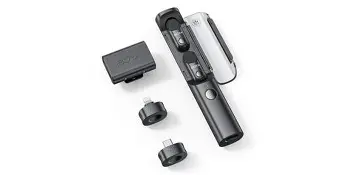
When I first opened the packaging, I was struck by the size. I’ve used the older Boya BY-WM series in the past, and while they were functional, they always felt a bit plasticky and utilitarian. The Boya Magic feels like a different breed. The charging case has a satisfying weight to it, and the units themselves are incredibly small—almost to the point where I was worried I’d lose them in a deep pocket. I remember my first shoot with them was a quick promotional video for a local coffee shop. I didn't want to bring a full sound bag, so I just slipped the case into my jacket pocket and headed out. That portability was the first "win" for me.
Setting it up for the first time was surprisingly seamless. I noticed that as soon as I pulled the transmitters and receiver out of the case, they were already paired. I’ve spent far too many minutes of my life squinting at tiny screens trying to sync frequencies on older UHF systems, so this "auto-everything" approach was a breath of fresh air. I plugged the receiver into my mirrorless camera, clipped the transmitter onto the barista’s apron, and we were recording within ninety seconds. However, I did notice something immediately: the clip on the transmitter is very strong, which is great for security, but it can be a bit of a struggle to get onto thicker fabrics like a heavy canvas apron without two hands.
Audio Quality: Does It Actually Sound Good?
This is where the rubber meets the road. I was surprised by the internal processing of the Boya Magic. In my experience, many of these "all-in-one" wireless kits tend to over-process the audio, leading to a "crunchy" or overly digital sound that is hard to fix in post-production. What I found with the Magic was a remarkably flat and natural profile. When I listened back to that first coffee shop interview, the barista’s voice had a pleasant warmth. It didn't sound like it was coming through a telephone, which is a common complaint with budget wireless gear.
I noticed that the high-frequency response is quite sensitive. If you are recording someone with a lot of sibilance (sharp 's' sounds), you might need to be careful with placement. I found that moving the mic just an inch further down the chest or slightly off-center helps soften those peaks. One thing that bothered me during an outdoor test was the built-in noise cancellation. There is a physical button to toggle it, and while it does an incredible job of removing steady background hums like a distant air conditioner, I found it a bit too aggressive for wind. In one instance, it cut out some of the lower frequencies of my voice along with the wind noise, making me sound a bit thin. Now, I prefer to leave the noise cancellation off and use the included wind muffs unless I’m in a truly desperate environment.
The "Magic" Features: What Sets It Apart
After testing for several months, I’ve realized that the real value of the Boya Magic lies in the small quality-of-life features that you don't necessarily see on a billboard. The internal recording feature was a lifesaver for me during a wedding shoot. I had the receiver plugged into my camera, but we had a massive burst of RF interference from a nearby DJ setup that caused a few seconds of digital dropout. Because I had enabled the onboard recording on the transmitter, I was able to just pull the clean audio file directly from the mic later that night. That single feature paid for the unit in my eyes.
Another observation I've made is regarding the battery life. Boya claims a certain number of hours, and in my experience, those numbers are actually fairly accurate. I’ve gone through entire eight-hour shooting days without having to worry about the transmitters dying, provided I popped them back into the charging case during lunch. I was also surprised by the range. While I rarely need to be 100 meters away from my camera, I did a line-of-sight test in a local park and managed to get clear audio at a distance that I’ll never actually use in a real-world scenario. It gives me a lot of confidence that the signal won't drop out just because a person walks between me and the camera at a close distance.
Discover deals on Cameras & Photography — updated daily.
Shop Amazon →The Disappointments: Nothing Is Perfect
I want to be honest about the things that frustrated me. No piece of gear is a 10/10, and the Boya Magic has its quirks. One thing that bothered me was the touchscreen on the receiver. While it’s bright and easy to see in the dark, it can be a bit finicky if you have larger fingers. I’ve occasionally accidentally changed a setting while trying to swipe between menus. I would have preferred a physical wheel or more tactile buttons for gain control.
I also noticed that the magnets used for the "Magic" mounting system, while clever, aren't always the best solution. They work perfectly on a thin t-shirt, but if you are wearing a structured blazer or a winter coat, the magnet isn't strong enough to hold the transmitter securely. I found myself reverting to the traditional clip more often than I expected. Furthermore, the wind muffs are a bit of a pain to attach. They use a twist-lock mechanism that feels like it might break if you force it too hard, and I’ve had one fall off in my bag because it wasn't seated perfectly.
Pros & Cons
- Pro: Exceptional portability with the included charging case that keeps everything organized and powered…
Feature Boya Magic Standard 2.4GHz Kits Entry-Level UHF Systems Setup Time Under 30 Seconds 1-2 Minutes 5+ Minutes (Manual Sync) Internal Backup Yes (8GB+) Rarely No Form Factor Ultra-Compact Compact Large/Bulky Charging Integrated Case USB-C per unit AA Batteries Signal Stability Excellent (Digital) Good Variable (Analog) Buying Guide: Is the Boya Magic Right for You?
Choosing audio gear is always a subjective process, but after using the Boya Magic for several months, I think I can categorize who will love it and who should perhaps look elsewhere. If you are a solo content creator who shoots on the move, this is a very strong contender. The ability to just grab one case and know you have two mics, a receiver, and a backup recorder is incredible for peace of mind.
However, if you are a professional sound mixer working on a high-budget film set, you might find the lack of XLR connectivity on the receiver a bit limiting. This is fundamentally a 3.5mm and USB-C system. It is designed for mirrorless cameras, smartphones, and laptops. I’ve used it with my iPhone for a few quick social media clips, and the plug-and-play nature was flawless, but for a "locked-down" studio environment, I might still prefer a dedicated wired boom mic for that extra bit of depth.
Another factor to consider is the environment you'll be shooting in. If you do a lot of interviews in crowded cities where the 2.4GHz spectrum is very "noisy" (lots of Wi-Fi signals), the Boya Magic handles it well, but no digital system is 100% immune to interference. If you absolutely cannot afford a single millisecond of drop-out and don't want to rely on the internal backup recording, you might still want to look at high-end analog systems, though they will cost three times as much and be significantly heavier.
One thing I always tell people is to look at the accessories. Does the kit include everything you need? In the case of the Magic, I appreciated that it came with the cables for both cameras and phones. I didn't have to go out and buy a separate TRS to TRRS adapter, which is a small detail but one that many brands overlook. If you value a "complete" experience where you aren't nickel-and-dimed for extra pieces, this kit provides a lot of value.
Shop the latest Cameras & Photography picks on Amazon.
Shop Amazon →Real-World Reliability: The Three-Month Verdict
After the initial honeymoon phase wore off, I started looking for signs of wear and tear. I’ve dropped the charging case twice (once on carpet, once on concrete). The case took a small scuff on the corner from the concrete drop, but the hinge remained perfectly functional and the internal charging pins didn't bend or lose contact. The transmitters have been sweated on during a summer outdoor shoot, and they haven't shown any signs of electrical issues. I was worried that the mesh covering the microphone capsule would get clogged with dust, but a quick blast of compressed air every few weeks has kept it looking new.
I noticed that the firmware updates from Boya have been relatively frequent. This is something I always look for. It shows the company is actually listening to user feedback. One of the updates improved the touchscreen responsiveness, which solved one of my early complaints. It’s always a good sign when a product gets better after you buy it rather than just sitting there with its launch-day bugs.
One final observation I'll share is about the "identity" of the sound. Every microphone has a "color." For example, some famous expensive mics are known for a "scooped" mid-range that makes voices sound "cinematic." The Boya Magic doesn't really do that—it sounds very much like the person actually sounds. For documentary work and vlogging, I think this is a massive advantage. You can always add warmth or bass in your editing software, but it's very hard to remove "fake" sounding processing if the mic is baked-in with a specific EQ curve.
Conclusion
So, is the Boya Magic hype justified? After using it as my primary wireless system for the last quarter of a year, I would say yes—with a few caveats. It is not a magical wand that will turn a noisy construction site into a silent studio, but it is a incredibly competent, reliable, and thoughtful tool for the modern creator. It has replaced my more expensive, bulkier kits for 90% of my work simply because it is easier to use and the audio quality is "close enough" that the viewer would never tell the difference.
The internal recording feature is the standout "pro" for me, acting as a insurance policy that has saved my work more than once. While I still have gripes about the touchscreen and the magnetic mounting limits, those are relatively minor compared to the overall performance. If you are looking for a system that grows with you—from shooting on your phone to moving up to a professional mirrorless camera—the Boya Magic is one of the most versatile options I’ve ever tested. It represents a solid balance of "pro" features and "consumer" ease of use that is hard to find in the current camera market. It has earned a permanent spot in my daily kit, not because it's perfect, but because it consistently gets the job done without getting in my way.