Biggest 32Ud59 B Buying Mistakes (And How to Avoid Them)
The transition to 4K resolution has transformed from a luxury upgrade into a standard requirement for professionals and enthusiasts alike. Among the myriad of options, the LG 32UD59-B has carved out a significant niche as a productivity-focused 32-inch monitor that balances screen real estate with Ultra High Definition clarity. However, because this specific model occupies a unique middle ground between budget 4K displays and high-end professional reference monitors, many buyers approach the purchase with incorrect expectations. Selecting a monitor is rarely about finding the absolute best specifications on paper; rather, it is about aligning those specifications with a specific workflow.
Buying electronics often involves navigating a minefield of marketing jargon and technical acronyms. For the 32UD59-B, the stakes are high because its 32-inch form factor and VA panel technology offer a distinct experience compared to the more common 27-inch IPS displays found in most offices. Making a mistake during this selection process can lead to ergonomic strain, color accuracy issues, or simple buyer’s remorse when the display doesn't behave as anticipated in a gaming or design environment. This article explores the most common pitfalls encountered when investing in this particular piece of hardware and provides a roadmap for ensuring the display meets the rigors of modern computing.
Detailed Product Analysis: Deciphering the 32UD59-B
To understand the potential mistakes one might make, it is first necessary to dissect what the 32UD59-B actually is. At its core, this is a 32-inch class monitor utilizing a Vertical Alignment (VA) panel. VA panels are known for their superior contrast ratios compared to In-Plane Switching (IPS) or Twisted Nematic (TN) panels. In the case of this LG model, users are treated to deep blacks and a high degree of static contrast, which makes it particularly attractive for media consumption and text-heavy productivity tasks where visual "pop" and legibility are paramount.
The resolution is 3840 x 2160 pixels, providing a pixel density that is comfortable for most users at a 32-inch size. Unlike 27-inch 4K monitors, which often require 150% or 175% Windows scaling to make text readable, a 32-inch screen allows many users to operate at 125% or even 100% scaling if they have sharp eyesight. This effectively provides more usable desktop "real estate" for multitasking, allowing for multiple windows to be tiled side-by-side without feeling cramped. Furthermore, the monitor supports 95% of the DCI-P3 color gamut, suggesting a level of color depth that exceeds basic sRGB monitors, even if it doesn't quite reach the heights of dedicated "AutoDesk" or "Adobe" certified displays.
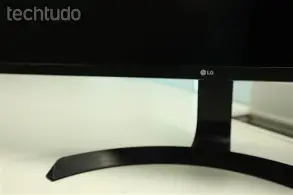
Connectivity is handled via HDMI and DisplayPort, with support for HDCP 2.2, which is essential for streaming 4K content from services like Netflix or Disney+. The stand offers height and tilt adjustments, which is a critical feature for a monitor of this size to ensure proper eye-level alignment. However, despite these robust features, the specific technical choices LG made—specifically the VA panel and the 60Hz refresh rate—are precisely where most buyers trip up.
The Vertical Alignment (VA) Variable
The choice of a VA panel is the most significant fork in the road for potential buyers. While VA provides excellent contrast (often 3000:1 compared to the 1000:1 found on IPS), it suffers from narrower viewing angles. If a user moves their head significantly to the left or right, they may notice "gamma shift," where colors appear slightly washed out or the brightness changes at the edges of the screen. For a single user sitting directly in front of the monitor, this is rarely an issue. However, for a collaborative environment where multiple people are looking at the screen, it can be a dealbreaker. Understanding this panel characteristic is the first step in avoiding a costly mismatch with your environment.
Mistake #1: Misunderstanding Panel Technology Requirements
The most frequent error buyers make is assuming that all 4K monitors are created equal, regardless of the underlying panel technology. Many professionals come from a world of IPS displays, which have become the standard for graphic design and photography due to their color consistency across wide angles. When these users switch to the 32UD59-B without realizing it uses a VA panel, they are often surprised by the subtle color shifts at the periphery of the screen.
Because the 32UD59-B is quite large (32 inches), the distance from your eyes to the center of the screen is shorter than the distance to the extreme corners. On a VA panel of this size, this can lead to a phenomenon where the colors at the very edge look slightly different than those in the middle, even if you are sitting perfectly centered. For a spreadsheet user, this is irrelevant. For a video editor color-grading a feature film, it can be catastrophic. Buyers must evaluate whether their work requires absolute color uniformity across the entire panel or if the high contrast and deep blacks of the VA tech are more beneficial for their specific tasks.
Looking for the best Electronics deals on Amazon?
View Offers →Mistake #2: Overestimating Gaming Performance
Another major pitfall is purchasing the 32UD59-B for high-intensity, competitive gaming. While the monitor features AMD FreeSync—which helps eliminate screen tearing by synchronizing the monitor’s refresh rate with the GPU’s output—it is fundamentally a 60Hz display. In the current market, "gaming" monitors are often expected to hit 144Hz, 165Hz, or higher. Furthermore, VA panels are notorious for "black smearing," a type of motion blur that occurs when dark pixels have to transition to lighter shades quickly.
Buyers who play fast-paced shooters like Counter-Strike or Valorant may find the response times and refresh rate of this LG model to be lacking. The 32UD59-B is excellent for "scenic" gaming—games like Microsoft Flight Simulator, Civilization, or cinematic RPGs where the 4K resolution and high contrast levels can truly shine. If you are a competitive gamer expecting the fluid motion of a high-refresh-rate TN or Fast-IPS panel, you are making a mistake by choosing this productivity-oriented powerhouse.
Mistake #3: Ignoring Ergonomics and Spatial Constraints
A 32-inch monitor is significantly larger than the standard 24 or 27-inch office display. A common mistake is failing to measure the depth of the desk. Because of its size, a 32-inch screen should be placed further back than a smaller monitor to prevent the "tennis match" effect, where the user has to physically turn their neck to see different parts of the UI. If your desk is shallow (less than 24 inches deep), the 32UD59-B will feel overwhelming and may lead to eye strain.
Furthermore, while the 32UD59-B includes a height-adjustable stand, many buyers ignore the VESA mounting options. For a screen this large, using a monitor arm c…
Pros and Cons of the LG 32UD59-B
- Pro: Superior Contrast and Black Levels. The VA panel provides deep, rich blacks that make movies and dark-themed applications look much better than they would on a standard IPS display.
- Pro: Generous Screen Real Estate. The 32-inch size allows for 4K resolution to be used comfortably without excessive scaling, effectively increasing the usable workspace for multitasking and large spreadsheets.
- Pro: DCI-P3 Color Spectrum. Supporting 95% of the DCI-P3 gamut means the monitor can display vibrant, saturated colors that basic office monitors cannot replicate.
- Pro: Build Quality and Adjustability. The inclusion of a height-adjustable stand is a major plus at this price point, allowing for better ergonomic alignment without needing separate risers.
- Con: Limited Viewing Angles. As with most VA panels, there is noticeable color and gamma shift if you view the monitor from the side or if you sit too close to the large screen.
- Con: 60Hz Refresh Rate limits. While fine for general use and office work, it lacks the smoothness desired by competitive gamers or those used to high-refresh smartphone screens.
- Con: Potential for Black Smearing. Fast-moving dark objects on screen may leave a slight trail or "smear," which is a native characteristic of the VA technology used in this model.
Technical Specification Comparison
To put the 32UD59-B in perspective, it helps to see how it compares to the general standards of other 32-inch 4K panels in its class. Buyers often confuse this model with the more expensive 32-inch IPS variants or the budget-oriented TN versions.
| Feature | 32UD59-B (VA) | Competitor Standard (IPS) | Entry-Level (TN) |
|---|---|---|---|
| Static Contrast Ratio | 3000:1 | 1000:1 | 1000:1 |
| Color Consistency | Moderate (Gamma Shift) | High (Uniform) | Low (Vertical Shift) |
| Black Depth | Excellent | Average (IPS Glow) | Poor |
| Work Suitability | Finance, Coding, Media | Design, Photography | Basic Office, Budget gaming |
| Refresh Rate | 60Hz | 60Hz - 144Hz | 60Hz - 75Hz |
Comprehensive Buying Guide: Who Should (and Shouldn't) Buy the 32UD59-B
To avoid a buying mistake, you must accurately categorize your primary use cases. The 32UD59-B is a specialized tool, and like any specialized tool, it excels in certain hands while frustrating others. Below are refined recommendations based on real-world use cases.
The Ideal User: Productivity and Media Professionals
If you spend your day in Integrated Development Environments (IDEs), massive Excel workbooks, or database management tools, this monitor is an exceptional choice. The high contrast makes text incredibly sharp, and the vast amount of pixels means you can keep your documentation open on one side of the screen while you work on the other. For those who use their computer as a primary media hub—watching 4K movies or streaming content—the VA panel’s ability to render deep blacks without the "grayish" tint often seen on IPS panels (known as IPS Glow) provides a much more immersive experience.
The Professional Creative: A Case for Caution
Photographers and graphic designers should proceed with care. If your work is primarily for web-based content and you don't require 100% Adobe RGB coverage, the DCI-P3 support on the 32UD59-B will likely suffice. However, if you are doing high-end print work or critical color matching, the VA panel’s viewing angle limitations might cause you to make incorrect editing decisions based on where your head is positioned relative to the screen. In this instance, spending more on an LG UltraFine or professional IPS series would be the wiser path.
Shop the latest Electronics picks on Amazon.
Browse Now →The Home Office Gamer
Many people now work and play on the same machine. If your gaming library consists of titles like The Witcher 3, Anno 1800, or Total War, the 32UD59-B is a fantastic hybrid. The 4K resolution provides breathtaking detail in single-player experiences. However, if you are a "frames-per-second" hunter, you should avoid this monitor. The 60Hz limit means that even if your powerful graphics card is outputting 120 frames per second, you will only ever see 60. For gamers, the mistake is usually ignoring the refresh rate in favor of the resolution.
Ergonomic Best Practices
To avoid the "size mistake," ensure you have at least 2.5 to 3 feet of clearance between your eyes and the screen. Use the height adjustment to ensure the top third of the monitor is at eye level. This prevents neck strain and minimizes the perceived color shift by keeping your line of sight as perpendicular to the screen as possible. If you find the monitor sits too low even at max height, consider a VESA-compatible desk mount. This not only improves ergonomics but also clears the desk space that the wide stand normally occupies.
How to Avoid Technical Compatibility Mistakes
A final, often overlooked mistake involves the hardware driving the monitor. To run the 32UD59-B at 4K at 60Hz, you must use a DisplayPort 1.2 (or higher) cable or an HDMI 2.0 cable. Many older laptops and even some modern budget docks only support HDMI 1.4, which caps the 4K output at 30Hz. Using a 4K monitor at 30Hz results in a "laggy" mouse cursor and choppy window movement that many users mistake for a faulty monitor or a slow computer. Before purchasing, verify that your computer’s hardware and any intermediary adapters or docks support the full 4K @ 60Hz specification. Furthermore, if you plan to use FreeSync, ensure you are using a compatible AMD GPU or a recent NVIDIA card that supports "G-Sync Compatible" mode over DisplayPort.
Additionally, check your electricity and cabling environment. Large 4K panels are sensitive to signal interference. Using the high-quality cables included in the box is generally better than using a random, older HDMI cable you found in a drawer. High-speed data transmission required for 4K is less forgiving of cable quality than standard 1080p signals.
Conclusion
The LG 32UD59-B remains one of the most compelling values in the 32-inch 4K market, provided the buyer knows exactly what they are getting. It is a contrast-rich, productivity-enhancing giant that bridges the gap between basic displays and specialized professional gear. The "mistakes" associated with this purchase almost always stem from a mismatch between the user's needs and the VA panel technology’s inherent characteristics. By acknowledging the limitations in viewing angles and refresh rates, and by preparing a workspace that can accommodate its physical size, buyers can leverage the strengths of the 32UD59-B to create a highly efficient and visually stunning workstation.
Choosing the right electronics is an exercise in prioritizing trade-offs. If your priority is deep blacks, large workspace, and crisp 4K text at a reasonable price, the 32UD59-B is a stellar choice. If your priority is competitive gaming or professional color-critical photography, your path lies elsewhere. Avoiding the common buying mistakes outlined here ensures that when you finally clear the space on your desk for this 32-inch display, it serves as an asset to your workflow rather than a source of frustration. Understanding the hardware is the best way to ensure that your investment in the 32UD59-B pays dividends in productivity and visual enjoyment for years to come.